POTS research asks why standing up can set the heart racing.
POTS, short for postural tachycardia syndrome, makes the heart rate climb sharply when you stand, often with lightheadedness and deep fatigue. Here is what studies in this area look at, how they test the body upright and what to ask a study team.
What an episode of POTS is like
Within minutes of standing, the heart rate rises far more than usual and stays high. People describe a pounding heart, a swimmy head, blurred or greying vision, shaky hands, nausea and a heavy tiredness. Many feel about to faint, and some do. Lying down usually eases it. Heat, a hot shower, a large meal, a long wait in line or a recent illness can make a spell worse.
Between spells the symptoms rarely vanish completely, but there are better days and worse days. On a good day many people work, study and get out of the house. On a bad one they may need to sit or lie down often. Many keep up extra fluids and salt on a doctor’s advice, wear compression garments and plan around heat and long standing.
Open questions that keep POTS research going
POTS seems to have more than one cause. In some people blood pools in the legs, in some the blood volume runs low, and in others small nerves or the immune system are involved, often after a viral illness. Researchers are working out how to tell these groups apart, why it is diagnosed most often in young women, and which approach helps which group.
Research
What studies of POTS look at
Fluids, salt and blood volume
How raising the volume of blood changes heart rate and symptoms when upright.
Medicines for heart rate and vessel tone
Tablets that slow the heart or tighten blood vessels, compared for upright symptoms.
Exercise that starts reclined
Programs that begin with rowing or cycling while lying back and build up slowly.
POTS that begins after an infection
Why it sometimes starts after a viral illness and what changes in the body.
Small nerves and immune signals
Skin and blood tests that look for nerve damage or an immune cause.
On record
How a study catches an episode of POTS
An attack seldom happens in front of a researcher, so studies plan how they will see one.
Tilt table testing
You lie on a table that tips you upright while heart rate and blood pressure are watched.
An active stand test
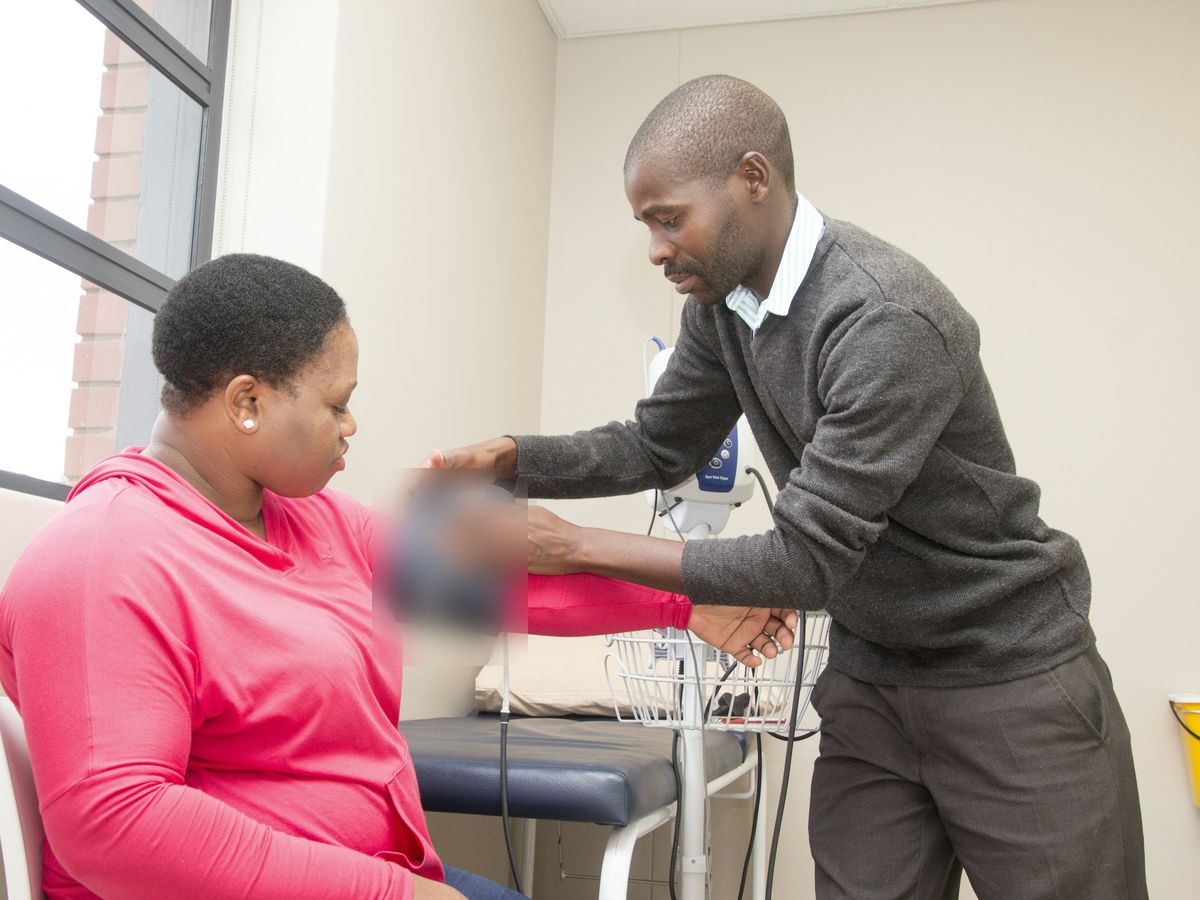
Heart rate and blood pressure are taken lying down, then several times after you stand.
Wearable heart rate recording
A chest strap or wrist sensor tracks heart rate through ordinary days and bad ones.
Lying and standing readings at home
You take your own readings with a home cuff, lying down and then standing, on a set plan.
When an episode starts
On a bad day, a study may ask you to take a lying and standing reading at home, note what came before the spell and mark the time on your wearable. Some ask you to contact the study team on its own line so it can see you while symptoms are strong. Your regular care and emergency care outrank any study request, and a treatment you rely on changes only after a word with your own doctor.
On a calm day
On a better day, visits may include a tilt or stand test, blood tests for blood volume and stress hormones, a sweat or skin test of small nerve function and a heart ultrasound to look for other causes. A visit where your heart rate rises less than usual is still useful, because the study can see how much you vary from one day to the next.
Questions for a POTS study team
Keep this list by the phone and add whatever else is on your mind.
- Will I need a tilt table test, and how long am I kept upright?
- Can I keep my salt, fluids and compression garments as they are?
- What happens if I feel faint at a study visit?
- Does the study look at POTS that began after an illness?
Words you may hear about POTS
- Tachycardia
- A heart rate faster than normal for the situation, such as when sitting or standing at rest.
- Orthostatic intolerance
- Symptoms such as dizziness, a racing heart or near-fainting that come on when upright and ease when lying down.
- Blood pooling
- Blood collecting in the legs and belly on standing, so less returns to the heart and brain.
POTS (postural tachycardia syndrome): what readers ask
The other five conditions
No. Many people with POTS feel faint without passing out, and some never faint at all. Its defining feature is a large, lasting rise in heart rate on standing without a big fall in blood pressure. Your own doctor or a specialist in the nerves that control heart rate can confirm it, usually with a stand or tilt test.
No. Young women receive the diagnosis most often, yet men, teenagers and older people live with POTS as well, and the groups studied vary from one study to another. The team behind each study chooses who takes part, using rules written for that study. Reading the listings near you gives a sense of the range.
Some studies ask you to keep everyday measures steady, so changes in symptoms are easier to read. Others test one of those measures directly. You hear which approach applies before you say yes to anything. Keep every everyday measure you rely on in place until your own doctor has talked it through with you.
You reach it yourself. Nothing you send Patient Charter is forwarded to a study, and Patient Charter itself runs, funds and recruits for none. Now and then we write about POTS research around your ZIP code, by email, plus texts if you ticked that box. If one appeals, ring or write to its team with your questions, and the decision about taking part rests with them.
Follow POTS research near you
Put POTS in the condition box beside your ZIP code. No text is ever sent unless you ask for texts.
Get updates